Forex Trading for Beginners
You can order the same kind of articles for your own video to boost it on YouTube and Google. Just message the Telegram bot @sat_sit_bot. The bot writes and publishes the articles itself (with your YouTube video embedded) on popular topical websites (no ads). Your first 50 articles are free.
· based on the channel JeaFx
Key takeaways
- Forex is the global currency market where currencies are traded in pairs; it is the largest financial market with over $7 trillion in daily volume.
- New traders often lose because they skip basic components like risk management, market structure, and trading psychology.
- A proper broker and trading account setup includes choosing a regulated broker, understanding spreads and leverage, and starting with a demo account.
- Building a market edge requires a repeatable strategy based on price action, backtesting, and journaling every trade.
- Mindset and realistic expectations are critical: most beginners fail due to emotional decisions and lack of discipline, not strategy.
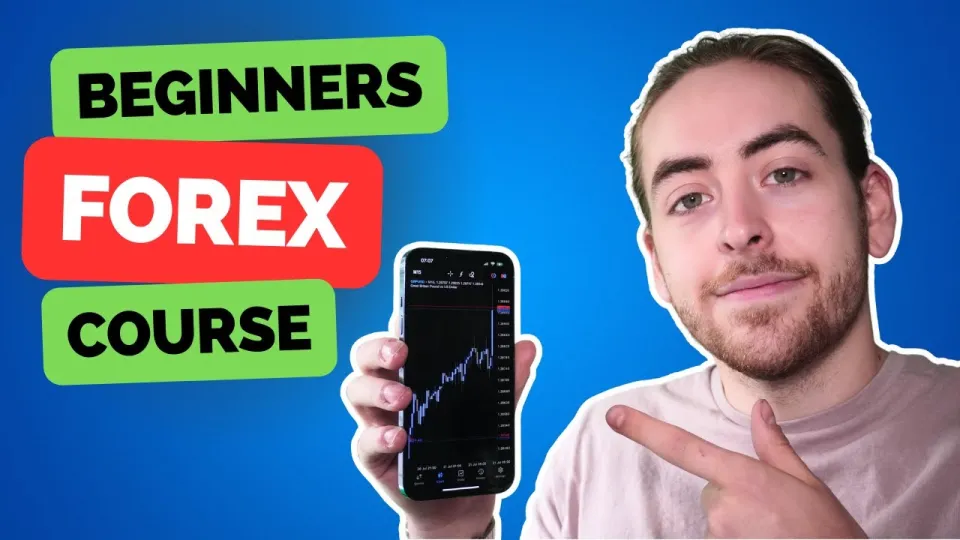
Forex trading for beginners starts with understanding what the foreign exchange market is, how currencies are traded in pairs, and how profits are actually made. This full course breaks down the core components every new trader needs: market basics, broker setup, building a trading edge, and the right mindset. For a deeper guided path, you can access the full class at JeaFx Class.
What Forex Is and What's Traded
Forex, or foreign exchange, is the market where national currencies are bought and sold against each other. It is the largest and most liquid financial market in the world, with a daily trading volume exceeding $7 trillion. Currencies are always traded in pairs, such as EUR/USD or GBP/JPY, and the price represents how much of the quote currency is needed to buy one unit of the base currency.
The most actively traded pairs are called majors and include the US dollar, euro, Japanese yen, British pound, Swiss franc, Canadian dollar, and Australian dollar. Beginners should focus on these because they have the tightest spreads and the most reliable liquidity. Unlike stocks, forex has no central exchange; trading happens over-the-counter through a network of banks, brokers, and electronic platforms.
How Money Is Made in Forex
Profit in forex comes from correctly predicting whether one currency will strengthen or weaken against another. If you buy a currency pair (go long), you profit when the exchange rate rises; if you sell (go short), you profit when it falls. The difference between the entry and exit price, multiplied by your position size, determines your gross profit or loss.
Leverage allows traders to control larger positions with a smaller amount of capital, but it also magnifies losses. For example, with 1:100 leverage, a $100 deposit can control a $10,000 position. A 1% move in the pair then equals $100 profit or loss—your entire deposit. That is why risk management must be learned before placing any live trade.
Broker and Trading Account Setup
Choosing a regulated broker is the first practical step for any beginner. Look for oversight from authorities like the FCA, ASIC, or CySEC, and check that client funds are held in segregated accounts. The broker's platform—usually MetaTrader 4 or 5—should offer tight spreads, reliable execution, and a demo account for practice.
When setting up your account, start with a demo to test your strategy without risking real money. Once you move to live trading, begin with a small amount you can afford to lose. Understand the fees: spreads, commissions, and swap rates for overnight positions. Avoid brokers that promise guaranteed profits or lack transparent pricing.
Building Your Market Edge
A market edge is a repeatable advantage that gives you a higher probability of success over many trades. It is not a secret indicator but a combination of analysis, risk management, and discipline. Most beginners fail because they trade randomly or chase signals without understanding why a setup works.
To build an edge, follow these steps:
- Choose one strategy based on price action or a simple technical concept, such as support and resistance or trend following.
- Backtest the strategy on historical data to see how it would have performed over at least 100 trades.
- Define clear entry and exit rules, including stop-loss and take-profit levels.
- Risk no more than 1% of your account per trade to survive losing streaks.
- Journal every trade with screenshots and notes to identify patterns in your behavior.
Consistency in applying your edge matters more than the edge itself. A simple strategy executed with discipline beats a complex one applied inconsistently.
Mindset and Realistic Expectations
Trading psychology is the difference between a profitable strategy and a losing account. Beginners often underestimate the emotional impact of losing trades and overtrade to recover losses. The market does not care about your feelings; it rewards patience and punishes impulsiveness.
Set realistic expectations: forex is not a get-rich-quick scheme. Professional traders may target 5–10% per month with significant drawdowns along the way. Accept that losses are part of the business and focus on the process rather than the outcome of any single trade. Keep a trading journal that includes your emotional state to spot recurring mistakes.
Common Questions from New Traders
Many beginners ask whether they can start with a small account, such as $500. The answer is yes, but only if you risk a tiny fraction per trade and treat it as tuition. With $500 and 1% risk, your maximum loss per trade is $5—enough to practice without blowing up. Another common concern is how long it takes to become consistently profitable. Most traders need at least one to two years of dedicated practice, backtesting, and journaling before seeing stable results.
Some wonder if they should trade during news events. Major economic releases can cause slippage and widen spreads, so beginners should avoid trading right around them until they understand volatility. Finally, many ask about the best strategy. There is no universal best strategy; the key is to master one approach and adapt it to your personality and schedule.
Useful Links
- JeaFx Class – access the full beginners course and guided lessons.
- JeaFx Go – master trading under direct mentorship.
- Instagram: @jeafx_ – follow for daily insights.
- Telegram: therealjeafx – join the free community.
Final Thoughts
Forex trading for beginners is a journey that requires education, practice, and emotional control. This course from JeaFx covers the essential building blocks: understanding the market, setting up with a regulated broker, developing a tested edge, and maintaining a disciplined mindset. Start with a demo account, risk small, and journal every trade. For structured guidance, visit JeaFx Class and take the next step in your trading education.
Questions & answers
How much money do I need to start forex trading?
You can start with as little as $100, but beginners should treat it as practice capital. With a $500 account and 1% risk per trade, your maximum loss is $5, which allows you to learn without significant financial damage. The key is to risk only what you can afford to lose and focus on building skills first.
What is the best forex trading strategy for beginners?
There is no single best strategy, but beginners should start with a simple price action approach, such as trading support and resistance or trend following. The strategy must be backtested over at least 100 trades and applied with strict risk management. Consistency in execution matters more than complexity.
How long does it take to become profitable in forex?
Most traders need one to two years of dedicated practice, including backtesting and journaling, before achieving consistent profits. Profitability depends on mastering risk management and psychology, not just finding a strategy. Expect setbacks and treat losses as learning opportunities.
Should I trade during major news events?
Beginners should avoid trading immediately around major economic releases because spreads widen and slippage can occur. Once you understand volatility and have a tested plan for news events, you can incorporate them, but only with reduced position size and strict risk controls.
Source: Forex Trading For Beginners (FULL COURSE) · Markdown version