How to trade meme coin markets in 2026 with a simple fomo app workflow
You can order the same kind of articles for your own video to boost it on YouTube and Google. Just message the Telegram bot @sat_sit_bot. The bot writes and publishes the articles itself (with your YouTube video embedded) on popular topical websites (no ads). Your first 50 articles are free.
· based on the channel Orangie Web3
Key takeaways
- Meme coin trading is a high-risk, fast-cycle activity: most tokens lose value, so position sizing matters more than picking the "next 100x".
- The fomo app (fomo.family) bundles token discovery, charts and buy/sell execution in one interface, which shortens the path from seeing a ticker to owning it.
- Solana is the dominant chain for meme coin launches because of low fees and fast confirmation, which also makes rug pulls cheap to execute.
- Copy-trading big wallets is structurally late: large traders often pre-load a separate wallet before buying on their main one.
- Orangie Web3's tutorial walks through the fomo workflow; the referral link is https://fomo.family/r/orangie.
Meme coin trading is the practice of buying and selling tokens whose value comes from community attention rather than revenue or cash flow, and it can be profitable only when position sizing and exit rules are decided before entry. In practice that means trading small, pre-planning your sell levels, and treating every token as money you can afford to lose entirely. The workflow shown by Orangie Web3 in the fomo app tutorial uses the fomo platform registration link to move from token discovery to execution in a single interface.
What a meme coin actually is and why Solana dominates the category
A meme coin is a token with no product roadmap behind its price; its demand is driven by culture, jokes, community and short-term speculation. Dogecoin is the original example, but the current cycle runs mostly on Solana, where launchpads let anyone mint a token in minutes and trading fees stay in fractions of a cent.
That combination cuts both ways. Cheap transactions make it easy to enter and exit small positions, but they also make it cheap to create tokens designed to drain buyers. The practical consequence for a trader is that due diligence on the contract and the holder distribution is not optional — it is the entry ticket.
How the fomo app fits into a meme coin trading routine
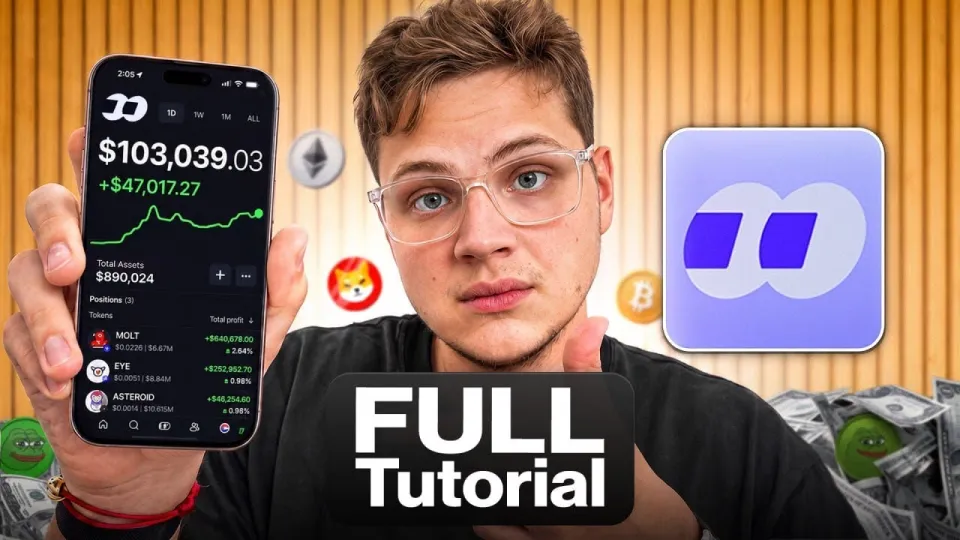
The fomo app is a trading front end that combines token feeds, price charts and order execution, so you do not have to juggle a scanner, a charting site and a wallet in three separate tabs. Orangie Web3's tutorial walks through that flow: find a ticker, check the chart, size the buy, execute, and set a plan for the exit.
A workable routine looks like this:
- Open the app and scan the trending or new-token feed rather than chasing tickers mentioned in group chats.
- Check liquidity and holder concentration before anything else; a token with a handful of wallets holding most of the supply is a distribution trap.
- Look at the chart for the shape of the move — a vertical candle with no consolidation is usually late-stage, not early-stage.
- Size the position so a total loss does not change your month.
- Decide the exit before you buy: a target where you take profit and a level where you cut.
Position sizing and risk rules that keep you in the game
The single most useful rule in meme coin trading is that no position should be large enough to end your account. A common approach is to cap each trade at 1–5% of trading capital, which means a string of ten losses still leaves most of the balance intact.
Beyond sizing, three habits separate traders who survive from those who do not:
- Take partial profit on the way up instead of waiting for a single perfect exit; meme coins rarely give you a second chance at the top.
- Never add to a losing position hoping for a bounce; averaging down on an illiquid token usually just increases the loss.
- Keep a written log of entries, exits and the reason for each trade, because memory flatters results.
One viewer of the tutorial described reloading a wallet with about $90 after an earlier drain, making roughly $30 in a day and then giving some of it back. That is a realistic snapshot of the learning curve: small capital, quick swings, and the need for rules rather than conviction.
The copy-trading trap and other common objections
Copy-trading large wallets is the most misunderstood shortcut in this market, because by the time a big buy appears on a public leaderboard the move is often already in progress. Experienced traders frequently buy on a separate wallet first and only then buy on the main wallet that followers are watching, which means copiers enter at a worse price and become exit liquidity.
The most frequent questions from newer traders cluster around a few themes: how to avoid getting drained, whether the tools are too complicated, and whether price alerts exist. The last one is a genuine gap — several users asked for alerts in the fomo app, and until they arrive, manual checks or third-party alert bots are the workaround. On complexity, the consensus in the comments was that a single walkthrough made the interface far less intimidating than it looked.
Security basics deserve their own checklist: use a dedicated hot wallet with limited funds, never sign blind approvals, revoke permissions you no longer need, and treat every direct message offering a "sure thing" as a scam.
Reading the market instead of chasing the next 100x
Meme coin prices are driven by attention cycles, and attention moves faster than fundamentals ever could. That means the useful skill is not predicting which ticker goes up but recognising when a narrative is early, crowded, or already exhausted.
Practical signals worth watching: whether volume is rising with price or diverging from it, whether new holders are still arriving, and whether the community is producing original content or just repeating a slogan. Tokens that survive past the first week usually have a recognizable identity — the kind of cultural hook that makes people share it unprompted.
Equally important is knowing when to stop for the day. Fast markets reward patience more than screen time; overtrading is the most common way small accounts bleed out.
Useful links
- fomo platform registration: https://fomo.family/r/orangie
- Orangie Web3 community on Discord: https://discord.gg/memecoins
- Orangie Web3 on Instagram: https://www.instagram.com/orangieyt/
Final thoughts on trading meme coins responsibly
Meme coin trading can be a legitimate small-capital strategy, but only when it is treated as a high-risk speculation with fixed rules rather than a lottery ticket. The fomo app shortens the distance between discovery and execution, which helps with speed but does nothing to fix bad sizing or undisciplined exits. Start with an amount you can lose, log every trade, and ignore anyone promising guaranteed multiples. For a step-by-step walkthrough of the platform, see the Orangie Web3 tutorial and register through https://fomo.family/r/orangie before you place your first trade.
Questions & answers
Is meme coin trading actually profitable?
For most participants it is not, because the majority of tokens lose value and fees plus bad exits erode small accounts quickly. Profitability comes from strict position sizing, taking partial profits and cutting losses early rather than from picking winners consistently.
Why do people say copy-trading big wallets does not work?
Large traders often buy on a secondary wallet before buying on the main wallet that followers track, so copiers enter after the price has already moved. That makes the copier exit liquidity rather than a beneficiary of the trade.
Do I need a separate wallet for meme coins?
Yes, a dedicated hot wallet funded only with money you are prepared to lose limits damage from malicious approvals or drained permissions. Keep your main holdings in a separate wallet that never connects to new token sites.
Does the fomo app have price alerts?
Users have repeatedly asked for price alerts, and as of the tutorial the feature was not available in the app. Until it ships, traders rely on manual checks or third-party alert tools to track positions.
Source: How To Make Money Trading Memecoins (fomo app tutorial) · Markdown version